

Nima Fatemi

Nima Fatemi · Ph.D. Candidate and UX Researcher

Human-AI Interaction and UX research for complex, high-stakes systems.

I research adaptive systems using EEG (biofeedback) and generative AI. My professional work applies mixed-methods research to improve decision-making and reduce errors in high-stakes environments.

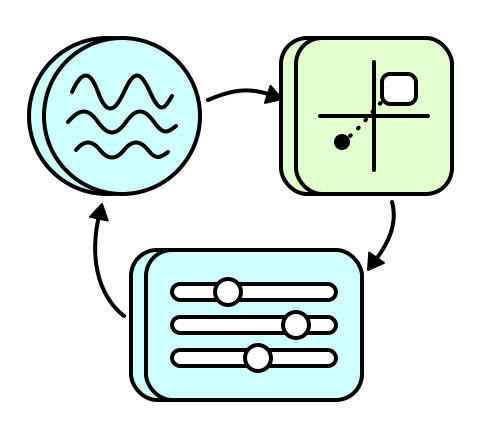
Closed-loop adaptive environment A cycle of four steps: sense with EEG, infer valence and arousal, compare the state to a calm-focus target, and actuate the environment. The loop closes through the participant. through theparticipant SenseEEG Infer statevalence / arousal Compare to targetcalm-focus zone Actuateenvironment valencearousal
A closed-loop concept from my Ph.D. research: the environment responds to measured state. Read the case

Main Works

Selected UX research

NC State UniversityCornell UniversityNorth Carolina State University, with Cornell's Design and Augmented Intelligence Lab (DAIL)

Spatial Signatures (Ph.D. Thesis)

Do people have a personal design signature when they create spaces for an emotion? Participants will each design the same empty living room four times, once for each of four emotional goals, in LOCI, a custom AI-assisted design tool I built. One to two weeks later, they will rate rooms made by others, plus their own rooms shown without labels.

Current stage: IRB approval. Planned study, no results yet.

Study design

emotional goals, one room each
4
analyzable participants targeted
~200
rooms rated per person in Session 2
49

View full case

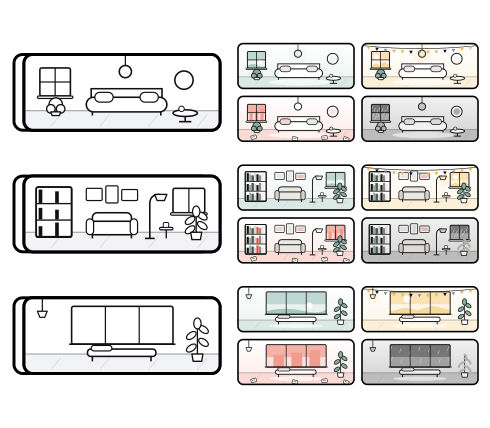
Three people, one per row. Left, each person's room as a plain line drawing. Right, the same room in four emotion treatments: the arrangement stays the same along a row, the colors repeat down the columns

NC State UniversityNorth Carolina State University: College of Design

Emotion-Adaptive Virtual Environments

Human-AI Interaction research on adaptive virtual environments that use EEG biofeedback and generative imagery to update visuals in real time. This closed-loop system evaluates how responsive interfaces can reduce stress and support cognitive focus.

A concept developed during my Ph.D. The concept has been tested.

System design

nodes: sense, infer, actuate
3
target loop latency
<500ms
papers coded into the Design Dictionary
60+

View full case

A loop of three plates: signal traces, a state plane with a target zone, and three parameter tracks, joined by arrows

HitachiHitachi Energy, USA2024

CoreTec UX Research and Redesign

Led end-to-end UX research and product redesign for Hitachi Energy’s CoreTec transformer monitoring platform, a mission-critical tool used by engineers to track asset health and alarms. Mixed-methods research surfaced 86 usability issues and informed a new information architecture, alarm model, data visualizations, and a reusable design system spanning 60+ screens and 7-inch embedded displays.

Impact

Slip errors reduced
80%
Time to critical information reduced
40%
Avg. task completion time improved
65%
  • 60+ high-fidelity screens and 7-inch layouts built on a reusable design system with custom gauges, icons, and dark mode for field use.

View full case

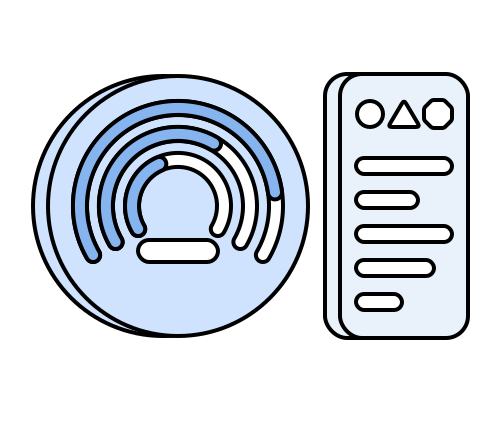
A layered circular gauge with three nested tracks, beside a panel with three alarm shapes and a column of readings

NC State UniversityNorth Carolina State University, College of Human Factors Psychology2024

AI Text Detection Study

Ran a behavioral study with 150 students to test whether people can distinguish AI-generated text from human writing. Combined experimental design, survey measures, and quantitative analysis to examine detection accuracy, confidence, and trust in AI-authored content.

Impact

students, within-subject
150
passages classified by each student
10
  • Students showed no real ability to detect AI-generated text
  • Higher AI proficiency increased confidence but not accuracy
  • Confidence was negatively correlated with trust in AI text
  • Revealed a confidence–accuracy–trust gap informing digital literacy and assessment design

View full case

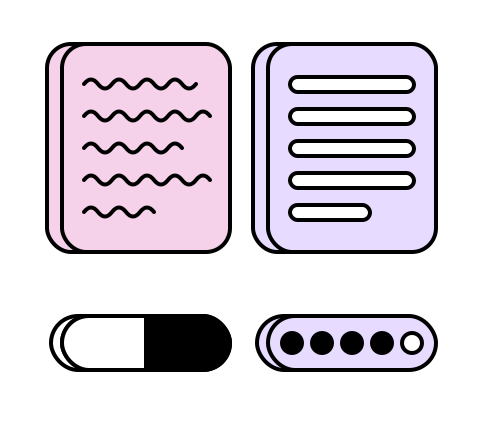
Two pages side by side, one with wavy handwritten lines and one with perfectly even lines, above a two-way choice and a five-dot confidence scale

NC State UniversityNorth Carolina State University, College of Design2025

Tactile Wayfinding Transfer Study

Tactile paving exists, but users still need a reliable way to learn what patterns mean and use them under real navigation conditions. We tested whether handheld “training tiles” can serve as onboarding for cane-based recognition of floor mats, and which learning signals predict errors. This de-risks how a tactile wayfinding system should teach, validate, and reinforce a pattern vocabulary.

Impact

cane-mat identification accuracy
89%
chance level
33%
  • Early learning confusion predicted worse cane performance.
  • Pattern type and location did not reliably affect the accuracy of pattern detection.

View full case

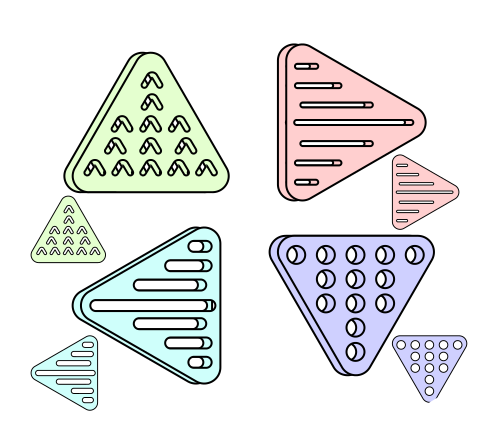
Triangular tactile training tiles showing three raised patterns, each in a large and a small size

Other Works

What's more

  • Audience reaching toward a glowing blue interactive installationInteraction Design
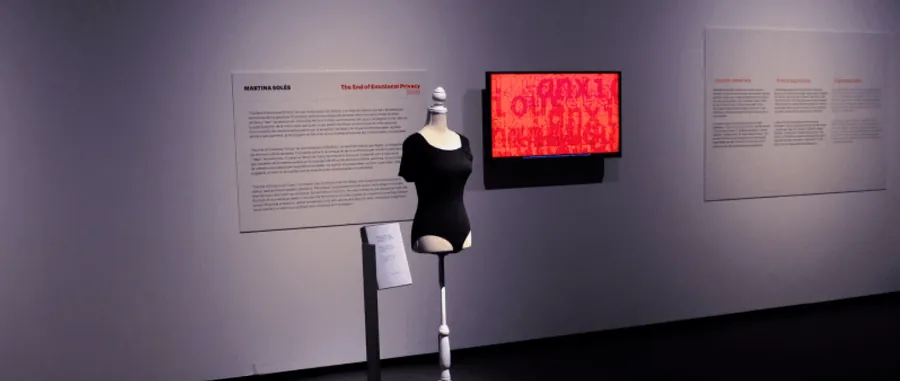
  • Wearable garment on a mannequin in a gallery exhibitionWearable
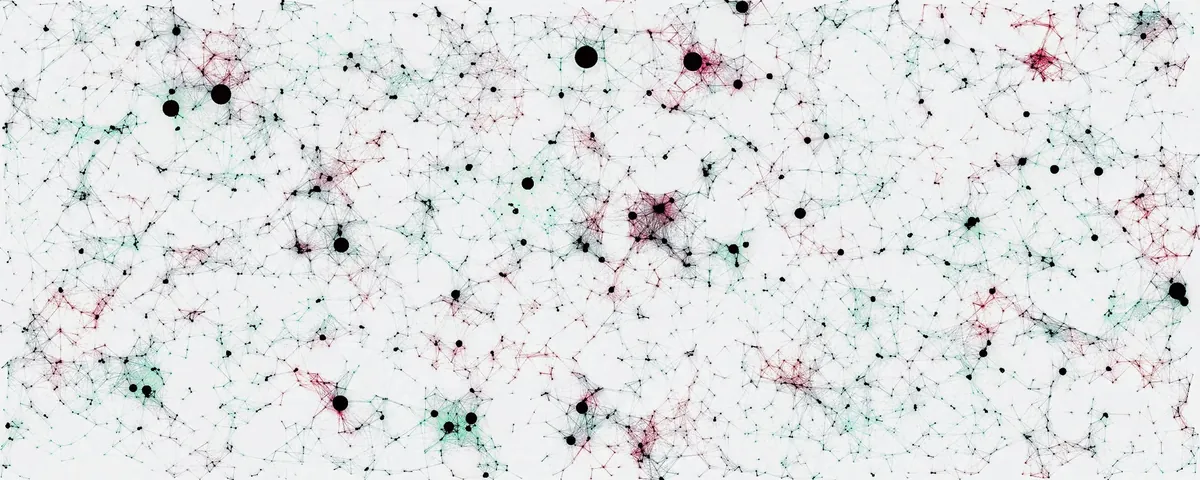
  • Generative network of fine cyan lines on a dark fieldInteractive Visuals
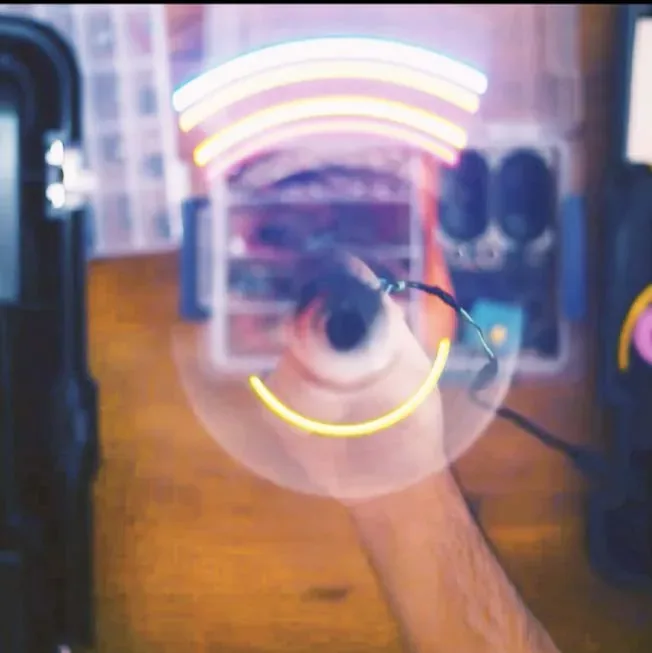
  • Hand-built electronic device with neon light arcs on a workbenchDIY

Scope, Skills & Tools

What and how

  • Human-AI Interaction
  • Mixed-Methods Research
  • Cognitive Psychology
  • Adaptive Systems
  • Usability Testing
  • Information Architecture
  • Data Visualization
  • UX Strategy
  • Prototyping

Human-AI Interaction Research

My research focuses on Human-AI Interaction, studying how people perceive, decide, and emotionally respond when working with intelligent systems. I bridge cognitive science with application through EEG and behavioral measures. Over three years as a Graduate Research Assistant, I planned and conducted usability studies, interviews, surveys, and mixed-methods analyses for complex systems.

Complex System Design

I translate research insights into practical design solutions for adaptive systems and data-intensive tools like dashboards and monitoring UIs. My work consistently reduces cognitive load, improves decision-making, and transforms complex information into actionable interfaces.

Prototyping & Technical Validation

I prototype rapidly in Figma, Framer, and code. I build both low-fidelity and high-fidelity data-rich interfaces, and experiment with EEG, generative visuals, and closed-loop adaptive systems. I also create experimental DIY prototypes with Arduino and Raspberry Pi.

Research Methods

  • Mixed-Methods
  • Usability Testing, User Journeys
  • Task Analysis
  • Heuristic Evaluation & IA Audits
  • Contextual Inquiry
  • Survey Design and Analysis
  • EEG/Physiological Metrics

Design & Prototyping

  • Research Plans & Interview Guides
  • Usability Test Scripts & Mixed-Methods Reports
  • Task Flows, IA Maps & Journey Blueprints
  • Low & High-Fidelity Prototypes
  • Design Systems
  • Data Visualizations
  • Status Dashboards for Complex Systems

Technical Stack

  • Google Analytics, Survey Tools, Jamovi
  • Figma, Framer, Webflow
  • Python, JavaScript (P5.js)
  • Arduino, Raspberry Pi
William GreerWilliam GreerHITACHI, NAM Digital R&D Lead
Nima Fatemi recently completed an internship with our team, contributing to the UX and UI development of our software products. He worked in a highly structured and methodical way, consistently providing clear updates and accurate forecasts for his activities. Nima took the initiative to bring together a diverse cross functional group so he could fully understand the system, user workflows, and key pain points. He produced both low fidelity concepts and high fidelity prototypes to validate ideas with the team and ensure alignment. He documented his work thoroughly and organized all deliverables so future teams can easily reference and build on the redesigned interface. He also facilitated training sessions to help the broader team understand user needs and incorporate UX thinking into future development. Nima would be an excellent addition to any team looking to improve existing interfaces or design new user experiences with a strong research driven approach.

CV

My detailed resume in PDF

Download PDF

About Me

Who am I

Portrait of Nima FatemiAbstract network visualization in green, pink and black

I'm Nima Fatemi

Ph.D. Candidate & UX Researcher @ NCSU

I am a Ph.D. student in Design with a focus on cognitive psychology and Human-AI Interaction. My work examines how people perceive and make decisions in complex systems, supported by coursework in cognitive science, neuroscience, and human factors.

I apply these foundations to practical UX challenges, using behavioral research and design methods to create clearer, more supportive interfaces for data-heavy and high-stakes environments.

Recent jobs
Visiting ResearcherCornell University, Design and Augmented Intelligence Lab (DAIL)Summer 2026 – Now
Graduate Research AssistantNorth Carolina State University2023 – Now
UX/UI Research and DevelopmentHitachi Energy2024
Lead UX ResearcherIAC2023

If my work resonates with you, feel free to reach out. I’m always happy to connect.

nfatemi@ncsu.edu